The International Software Testing Qualifications Board (ISTQB) Certified Tester Foundation Level (CTFL) is the world's most recognized entry-level certification in software testing. This globally accepted credential validates your understanding of software testing fundamentals, test design techniques, test management, and tool support.
The Certified Tester Foundation Level (CTFL) course provides a strong foundation in software testing principles and best practices based on the latest ISTQB syllabus. Participants will learn how testing contributes to software quality, how to design and execute effective test cases, and how to manage defects and testing activities.
This practical training includes real-world examples, case studies, mock tests, and exam-oriented guidance to help professionals pass the certification and apply testing concepts in real projects.
Software Testers, QA Engineers, Test Analysts, Manual Testers, Automation Testers, Developers, Business Analysts, Project Managers, Scrum Masters, Product Owners, Quality Assurance Professionals, Fresh Graduates, IT Professionals seeking a career in software testing
Pick a cohort that matches your availability. Limited seats per batch to ensure hands-on mentor support and lab guidance.
Go from learning to earning with role-aligned outcomes, practical skill-building, and employer-ready positioning.
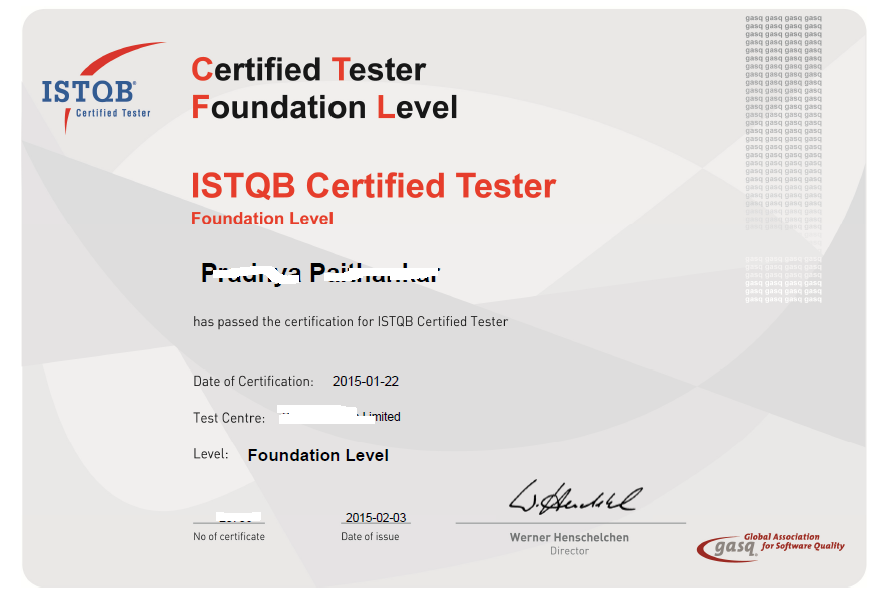


The ISTQB (International Software Testing Qualifications Board) Foundation Level certification is an entry-level, globally recognized credential that validates a candidate’s fundamental knowledge of software testing principles, practices, and terminology. It serves as a benchmark for understanding structured testing approaches aligned with industry standards.
This training is ideal for aspiring software testers, QA engineers, developers, business analysts, project managers, and IT professionals seeking to build a strong foundation in software testing. It is also suitable for fresh graduates aiming to enter the QA domain.
There are no formal prerequisites for the Foundation Level exam. However, having basic knowledge of software development and an understanding of SDLC (Software Development Life Cycle) concepts can be beneficial.
The syllabus includes fundamentals of testing, software development lifecycle models, static testing, test design techniques, test management, and tool support for testing. It provides a comprehensive understanding of both theoretical and practical aspects of software testing.
Preparation time typically ranges from 3 to 6 weeks, depending on prior experience and study commitment. Structured training programs, such as those offered by IEVISION IT SERVICES, can significantly accelerate preparation through guided learning.
The exam consists of 40 multiple-choice questions to be completed within 60 minutes (or 75 minutes for non-native English speakers). Each question carries one mark, and there is no negative marking.
Candidates must score at least 65%, which means correctly answering a minimum of 26 out of 40 questions.
ISTQB certification enhances professional credibility, improves job prospects, and demonstrates a standardized understanding of testing practices. It also helps professionals align with global QA methodologies and increases opportunities for career growth.
Recommended materials include the official ISTQB syllabus, accredited training course materials, sample question papers, mock exams, and guidance provided during instructor-led sessions by experienced trainers like Mr. Mahesh Pande.
Yes, ISTQB certification is internationally recognized and accepted across industries, making it a valuable credential for professionals seeking global career opportunities in software testing.
The exam cost varies by country and certification board but generally falls within a moderate fee range. Training providers like IEVISION IT SERVICES may offer bundled packages that include training and exam vouchers.
Yes, the ISTQB Foundation exam can be taken online through authorized exam providers using remote proctoring, allowing candidates to take the test from their home or office.
The ISTQB Foundation Level certification does not expire and is valid for a lifetime.
The Foundation Level focuses on basic concepts and terminology, while Advanced Level certifications delve deeper into specialized areas such as Test Management, Test Analysis, and Technical Test Analysis, requiring prior certification and experience.
After certification, professionals can pursue Advanced Level ISTQB certifications, specialize in automation or performance testing, gain practical project experience, and explore higher roles in QA such as Test Lead or QA Manager.
We go beyond teaching, we build careers.
Learn from industry practitioners with 10-20 years of real-world experience across enterprise teams.
Train for leading certifications across cybersecurity, cloud, AI, and governance tracks.
Get resume reviews, mock interviews, and personalized support for role transitions and growth.
Practice with guided labs, projects, and sandbox exercises aligned to real implementation scenarios.
Choose from live weekend, weekday, and fast-track formats based on your availability.
Stay supported with trainer access, learner community help, and dedicated coordination assistance.