Advance your cybersecurity career with the CISSP Certification Training by IEVISION IT SERVICES, a comprehensive and industry-aligned program designed for professionals who aspire to become leaders in information security, cyber risk management, governance, and enterprise security architecture. Expertly delivered by Cyber Security, this premium training program helps participants master the globally recognized 8 CISSP domains and prepare confidently for the certification exam by ISC2.
The IEVISION CISSP course is structured to provide in-depth knowledge of key cybersecurity areas, including Security and Risk Management, Asset Security, Security Architecture and Engineering, Communication and Network Security, Identity and Access Management (IAM), Security Assessment and Testing, Security Operations, and Software Development Security. The curriculum is aligned with the latest ISC2 CISSP exam outline and focuses on practical, real-world applications used by global enterprises.
Participants benefit from live instructor-led sessions, domain-wise practice questions, real-time case studies, mock tests, exam-oriented strategies, and hands-on security scenarios, making this course ideal for cybersecurity analysts, security engineers, IT managers, auditors, consultants, and professionals preparing for senior leadership roles.
The CISSP certification is one of the most respected credentials in the cybersecurity industry and significantly enhances opportunities for roles such as Security Manager, Security Architect, Cybersecurity Consultant, Risk Manager, Governance Lead, and CISO-track positions. This training strengthens professional credibility, improves salary growth potential, and opens doors to global career opportunities.
Choose IEVISION CISSP Training for expert mentorship, practical cybersecurity learning, certification guidance, and career-focused training that empowers you to excel in the fast-growing field of information security.
|
CISSP Domain |
Weightage |
|
Security and Risk Management |
16% |
|
Asset Security |
10% |
|
Security Architecture and Engineering |
13% |
|
Communication and Network Security |
13% |
|
Identity and Access Management (IAM) |
13% |
|
Security Assessment and Testing |
12% |
|
Security Operations |
13% |
|
Software Development Security |
10% |
CISSP Certification Exam Details
Pick a cohort that matches your availability. Limited seats per batch to ensure hands-on mentor support and lab guidance.
Go from learning to earning with role-aligned outcomes, practical skill-building, and employer-ready positioning.
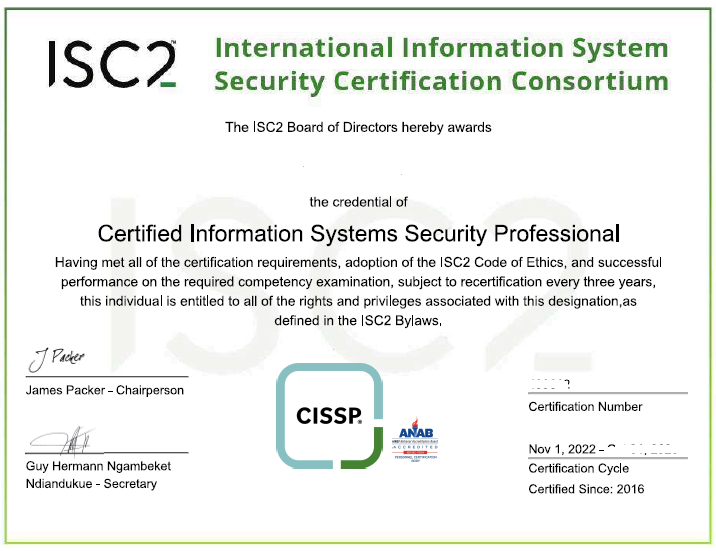

The objective of the CISSP (Certified Information Systems Security Professional) Training program is to equip participants with in-depth knowledge of information security concepts, best practices, governance frameworks, and risk management principles aligned with global cybersecurity standards. The program is designed to help professionals build expertise across the 8 CISSP domains, strengthen their practical security skills, and prepare confidently for the official certification exam.
This course is ideal for:
It is especially beneficial for professionals aiming to advance into senior security, architecture, governance, and leadership roles.
There are no strict prerequisites for joining the training program. However, having prior knowledge or work experience in:
will be highly beneficial.
For the official CISSP certification, candidates typically need five years of cumulative paid work experience in two or more CISSP domains, as defined by ISC2.
The training covers all 8 CISSP domains, including:
The curriculum is aligned with the latest ISC2 CISSP exam outline and includes practical industry use cases.
The course duration typically ranges from 30 to 40 hours, depending on the batch type.
Common schedules include:
The complete program is generally completed within 4 to 6 weeks.
Yes, IEVISION IT SERVICES offers flexible delivery options:
This ensures flexibility for both working professionals and students.
Yes, the training strongly focuses on practical learning through:
This approach helps participants apply theory in real enterprise environments.
The program is professionally conducted by Mr. Mahesh Pande, an experienced cybersecurity and information security trainer at IEVISION IT SERVICES.
Mr. Pande brings strong industry expertise in:
The sessions are designed with practical industry insights and exam-oriented guidance.
Yes, participants receive comprehensive learning support materials, including:
These resources help in effective exam preparation and revision.
Yes, the course includes complete CISSP certification exam preparation support, including:
This helps candidates prepare confidently for the official exam.
The assessment process includes:
This ensures readiness before appearing for the official CISSP exam.
The course fee depends on:
Flexible payment options generally include:
Please contact IEVISION IT SERVICES for the latest fee details.
Yes, special packages are available for:
Customized enterprise cybersecurity training packages can also be arranged.
CISSP is one of the most globally recognized cybersecurity certifications.
It helps in:
Common roles include:
Participants can register directly through IEVISION IT SERVICES.
For registration, upcoming batch schedules, and support queries, please contact:
IEVISION IT SERVICES
Trainer: Mr. Mahesh Pande
Training Support Team / Course Coordinator
Explore similar programs learners usually take along with this track.
We go beyond teaching, we build careers.
Learn from industry practitioners with 10-20 years of real-world experience across enterprise teams.
Train for leading certifications across cybersecurity, cloud, AI, and governance tracks.
Get resume reviews, mock interviews, and personalized support for role transitions and growth.
Practice with guided labs, projects, and sandbox exercises aligned to real implementation scenarios.
Choose from live weekend, weekday, and fast-track formats based on your availability.
Stay supported with trainer access, learner community help, and dedicated coordination assistance.